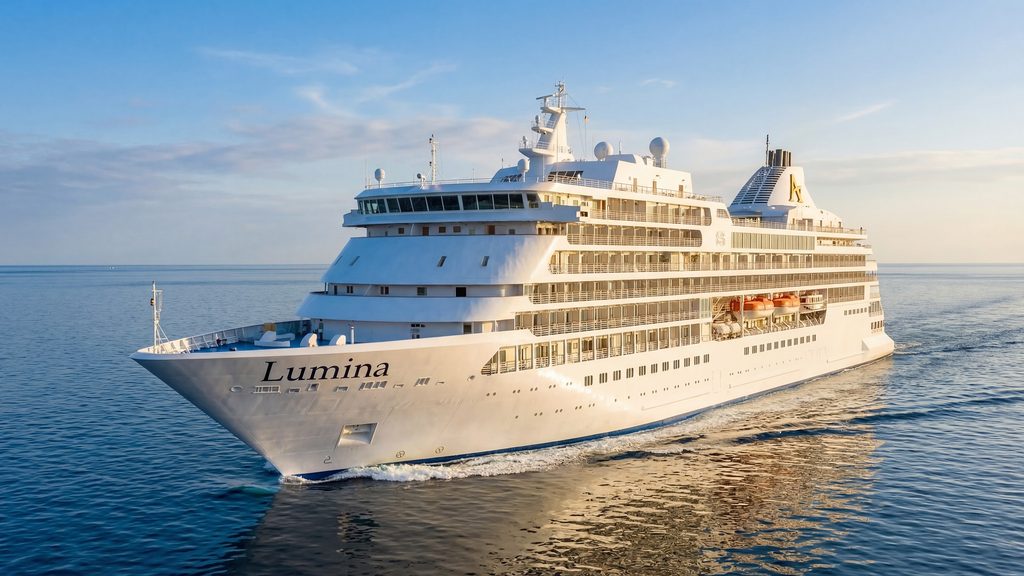
The future of a second residential cruise venture launched by the founders of Villa Vie Residences is now in doubt. Avora Lumina LLC voluntarily filed for Chapter 11 protection on November 23, 2026, with the U.S. Bankruptcy Court for the Southern District of Florida. The filing comes less than a month after Villa Vie Residences suspended operations of Villa Vie Odyssey in Cambodia, forcing more than 200 residents to leave the ship.
Avora had planned to convert Seven Seas Navigator, currently part of the Regent Seven Seas Cruises fleet, into a luxury residential vessel. The ship was scheduled to enter service in January 2028, departing Lisbon on a three-year world voyage. The bankruptcy filing has cast uncertainty over whether the project can still proceed as originally planned.
Liabilities Estimated at Up to $10 Million
According to the bankruptcy petition, Avora Lumina LLC estimates its assets at between $10 million and $50 million, while its liabilities are listed at between $1 million and $10 million. The company reported between one and 49 creditors. Its largest disclosed claim is held by Bermuda-based Navigator Vessel Company LLC, which is listed as being owed $2.5 million. The company is also the owner of Seven Seas Navigator.
The petition was signed by Avora founder and chairman Mikael Petterson. The company has opted for Subchapter V of Chapter 11, a procedure designed to help eligible smaller businesses reorganise under court supervision. It offers a streamlined process with specific rules for companies that meet the relevant legal requirements.
According to Avora’s lawyer, the filing is intended to create time to secure new financing or find a potential buyer for the company. It does not necessarily mean that Avora will immediately cease to exist. However, it does make clear that the company needs to restructure its financial position and that the future of the project can no longer be taken for granted.
A Nine-Year Charter for Seven Seas Navigator
In March 2026, Avora announced that it would use Seven Seas Navigator for its residential cruise concept. The arrangement was not a conventional purchase, but a nine-year bareboat charter agreement with Norwegian Cruise Line Holdings, including a nominal purchase option. Under a bareboat charter, the charterer takes over the vessel without crew or operational services and is responsible for its operation.
The agreement provided for delivery of the ship in December 2027. That timing is significant: Seven Seas Navigator is still scheduled to sail for Regent Seven Seas Cruises for the time being. Regent’s latest published itinerary shows the ship arriving in Lisbon on December 10, 2027, after which it was originally due to be handed over to Avora.
The Chapter 11 filing does not automatically terminate the charter agreement. During the proceedings, Avora will need to clarify whether it can continue with the arrangement. The company may ask the court to retain or reject the agreement. The position of the vessel’s owner, the availability of financing and the ship’s future schedule will therefore be important issues in the coming months.
From Cruise Ship to 242 Private Residences
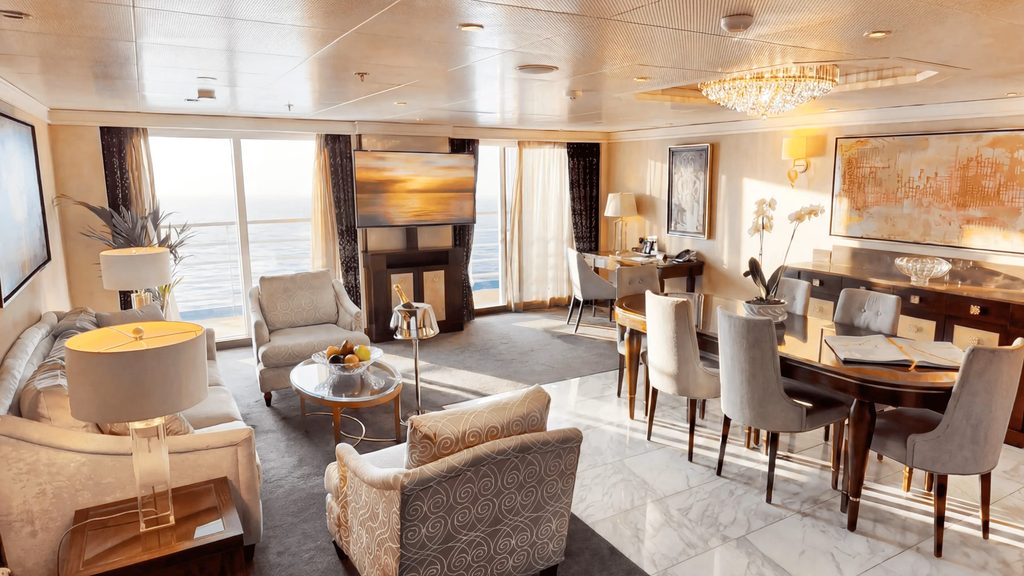
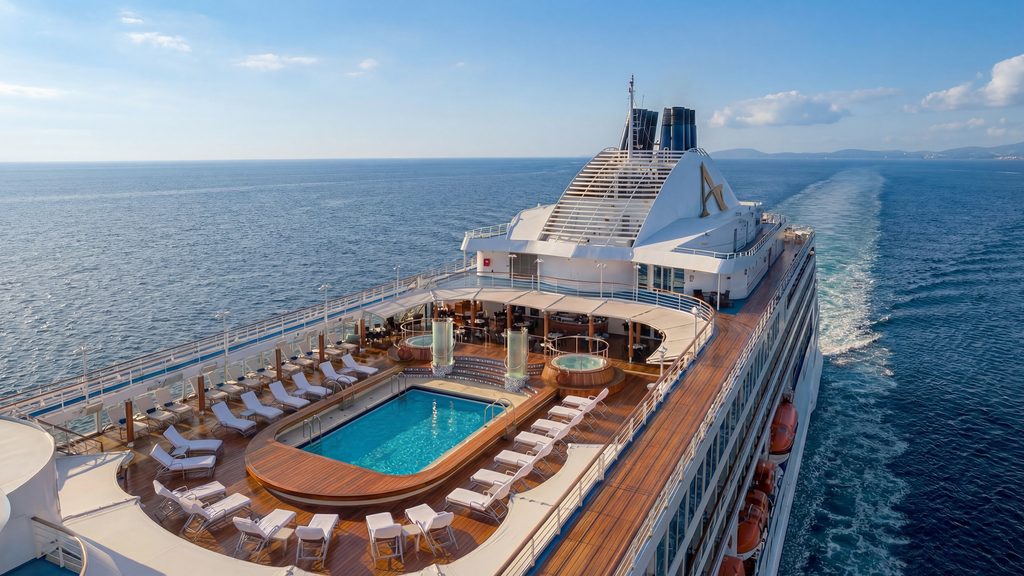
Under the original plans, Seven Seas Navigator would undergo an extensive conversion to accommodate 242 private residences. Its existing capacity of approximately 496 guests would be replaced by a residential concept aimed at people looking to live at sea for extended periods or even permanently.
Avora planned to depart from Lisbon in January 2028 on a three-year global voyage visiting more than 140 countries and over 400 destinations. The concept was aimed at people seeking more than an extended cruise: a permanent home at sea, combined with the opportunity to travel around the world over a longer period.
The financial commitment was substantial. Life-of-ship ownership was priced from approximately $545,000 to $4.2 million, while five-year programmes started at around $219,600. Avora was positioning itself firmly in the luxury segment of the residential cruise market.
It remains unclear whether conversion work had already begun or how much prospective residents may have paid in deposits. Nor is it known what financial commitments Avora had already made in preparing the vessel. The Chapter 11 proceedings may provide further clarity on these matters.
The Same Founders Behind Villa Vie Residences
The filing puts Avora back in the spotlight alongside the difficulties facing Villa Vie Residences. Both companies were founded by Mikael Petterson and Kathy Villalba. Villa Vie attracted international attention with Villa Vie Odyssey, a former cruise ship that began a global voyage in 2024, offering residents the opportunity to live on board for extended periods or even permanently.
On October 27, 2026, Villa Vie suspended the ship’s operations in Sihanoukville, Cambodia. The company said fuel costs in parts of Asia had risen so sharply that its existing business model was no longer sustainable. Monthly fuel expenses per cabin, which had historically averaged approximately $1,800, had recently reached an estimated $6,000 to $8,000 in some Asian regions, according to Villa Vie.
Residents were required to disembark. The ship left Cambodia in early November without passengers. Villa Vie announced that it was exploring restructuring and recapitalisation options, while acknowledging that no solution had yet been secured.
The developments at Avora are a separate matter, but the shared founders and timing inevitably connect the two ventures in coverage of the residential cruise sector. Villa Vie’s financial difficulties do not establish that Avora filed for protection for the same reasons. However, the two cases raise questions about the financial viability of residential cruise concepts that depend on long-term financing and substantial operating commitments.
We previously examined the background and challenges facing Villa Vie in Villa Vie Odyssey: How the Dream of a Lifetime World Cruise Came to a Halt in Cambodia. The article traces how delays, financial pressure, itinerary changes and rising operating costs ultimately led to the suspension of operations in Cambodia.
What Does Chapter 11 Mean for Avora?
In the United States, Chapter 11 provides companies with an opportunity to restructure their finances under court supervision. During the process, a business may seek new financing, renegotiate agreements with creditors or explore a potential sale. The aim is to give the company an opportunity to continue operating where possible.
For Avora, the treatment of the charter agreement for Seven Seas Navigator will be particularly important. If the company wants to retain the contract, it will need to demonstrate that it can meet its obligations. At the same time, it must secure sufficient funding for the planned conversion and the further preparation of the vessel.
The coming months should show whether Avora can attract an investor or buyer and whether its original plans for Avora Lumina remain viable. Until more concrete information becomes available, the proposed world voyage remains uncertain. Prospective residents will have to wait for the outcome of the court proceedings and the company’s search for new financing.
Pictures courtesy of Avora Residences.
Sign up for our newsletter and receive more travel tips and inspiration!